
Manufacturing Process of Rice Rubber Rollers
Table of Contents
Manufacturing Process of Rice Rubber Rollers (Complete Guide)
What Is the Manufacturing Process of Rice Rubber Rollers in Rice Milling Industry?
The manufacturing process of rice rubber rollers involves six industrial stages: rubber compounding, sheet formation, metal core preparation, compression molding, vulcanization, and precision grinding. These steps transform raw nitrile rubber into high-performance rollers used in rice mills for efficient dehusking of paddy while minimizing grain breakage.
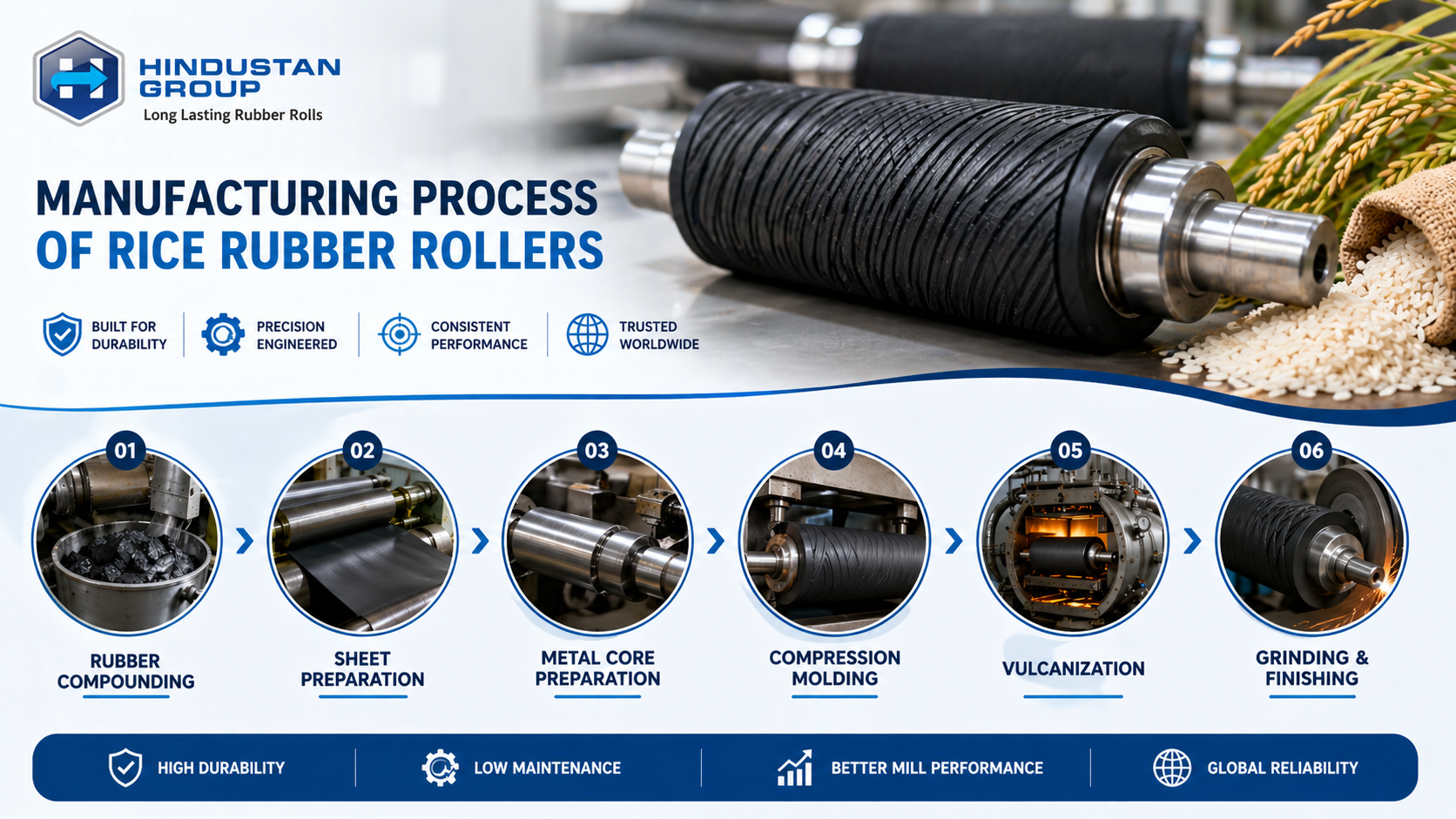
Complete Overview of Rice Rubber Roller Manufacturing Process in Modern Rice Milling Industry
The rice rubber roller manufacturing process is a precision-driven industrial system used to produce high-durability rollers required in rice milling machines. These rollers are made using nitrile rubber compounds and are designed to provide controlled friction for efficient rice dehusking in modern rice mills.
Step-by-Step Industrial Manufacturing Process of Rice Rubber Rollers Used in Rice Milling Machines
Step 1: High-Precision Rubber Compounding Process for Rice Rubber Roller Manufacturing
In this stage, raw rubber is mixed with chemical additives to achieve required mechanical properties.
Key functions:
- Adjust hardness (Shore A scale control)
- Improve abrasion resistance for rice milling
- Enhance elasticity and durability under load
👉 This step determines the overall quality of the rubber roller production process
Step 2: Controlled Rubber Sheet Formation and Material Preparation for Rice Rubber Roll Manufacturing
The compounded rubber is processed into uniform sheets.
- Rubber is rolled under controlled pressure
- Sheets are cut into precise industrial dimensions
- Material is prepared for molding on metal cores
Step 3: Metal Core Preparation and Surface Treatment for Rice Dehusking Rubber Roller Manufacturing
A strong metal core is prepared to support rubber coating.
- Steel or aluminium shaft cleaning
- Surface roughening for better bonding
- Application of industrial adhesive layers
Step 4: Compression Molding Process for Shaping Rice Rubber Rollers in Rice Milling Industry
This stage defines roller shape and structure.
- Rubber is wrapped around the core
- High-pressure compression molding is applied
- Ensures uniform diameter and perfect alignment
👉 This is a key stage in how rice rubber rollers are made in factories
Step 5: Vulcanization Process for Strengthening Rice Rubber Rollers Used in Rice Milling Machines
The most critical chemical transformation stage.
- Heat and pressure are applied in controlled chambers
- Rubber undergoes cross-linking reaction
- Strength, elasticity, and heat resistance are permanently enhanced
✔ Improves:
- Wear resistance
- Load handling capacity
- Long operational life in rice mills
Step 6: Precision Cooling, Grinding, and Surface Finishing of Rice Rubber Rollers for Rice Milling Efficiency
Final production stage ensures accuracy and performance.
- Gradual cooling to stabilize structure
- Surface grinding for smooth finish
- Dynamic balancing to avoid vibration in rice mill machines
Detailed Materials Used in Manufacturing of Rice Rubber Rollers for Rice Mills
| Material Component | Industrial Purpose |
| Nitrile Rubber | Elasticity & durability |
| Chemical Additives | Heat resistance |
| Fillers | Structural strength |
| Metal Core | Mechanical support |
👉 These define the materials used in rice rubber roller manufacturing process
Types of Rice Rubber Rollers Manufactured for Different Rice Milling Applications
- Raw Paddy Rice Rubber Rollers
- Parboiled Rice Rubber Rollers
- Steam Rice Rubber Rollers
- 1121 Basmati Rice Rubber Rollers
Each type is optimized for specific rice dehusking rubber roller applications in rice mills
Industrial Quality Testing Process for Rice Rubber Rollers in Rice Milling Manufacturing Units
Each roller undergoes strict quality control tests:
- Hardness testing (Shore A scale measurement)
- Heat resistance testing under load
- Vibration and balance testing
- Durability simulation in rice milling conditions
Ensures consistent rice milling performance and reduced breakdown
Importance of Manufacturing Precision in Rice Rubber Roller Production for Rice Milling Efficiency
Precision manufacturing directly impacts:
- Rice yield percentage improvement
- Reduction in broken rice grains
- Energy efficiency in rice mills
- Long-term machine durability
Poor manufacturing leads to inefficiency and high operational costs.
Industrial Applications of Rice Rubber Rollers in Modern Rice Milling and Processing Plants
Rice rubber rollers are widely used in:
- Commercial rice mills
- Industrial husking and hulling machines
- Export-grade rice processing plants
- Automated rice milling systems
Trusted Industrial Manufacturer of Rice Rubber Rollers for Global Rice Milling Industry
A leading example of industrial-grade production standards is Hindustan Group, which specializes in high-quality rice rubber roller manufacturing for domestic and international rice milling industries.
Explore the range of our Rice Whitener Stones by Hindustan Group
Rice Rubber Roller | 1121 Rolls | Par Boiled Paddy Rolls | Rice Polishing Wheel | Rice Rubber Polisher Brakes / Sticks | PF Resin
Frequently Asked Questions
It includes rubber compounding, molding, vulcanization, and precision finishing for rice dehusking applications.
Nitrile rubber, chemical additives, fillers, and a metal core are used.
It strengthens rubber by heat and pressure, improving durability and performance.
Raw paddy, parboiled, steam rice, and 1121 rice rubber rollers.