
Rice Rubber Roller vs Traditional Steel Huller: Which Is Better?
Table of Contents
Rubber Roller vs Steel Huller
Introduction
In the modern rice milling industry, choosing the right hulling technology can directly impact rice quality, yield, and overall profitability. One of the most common debates among mill owners is:
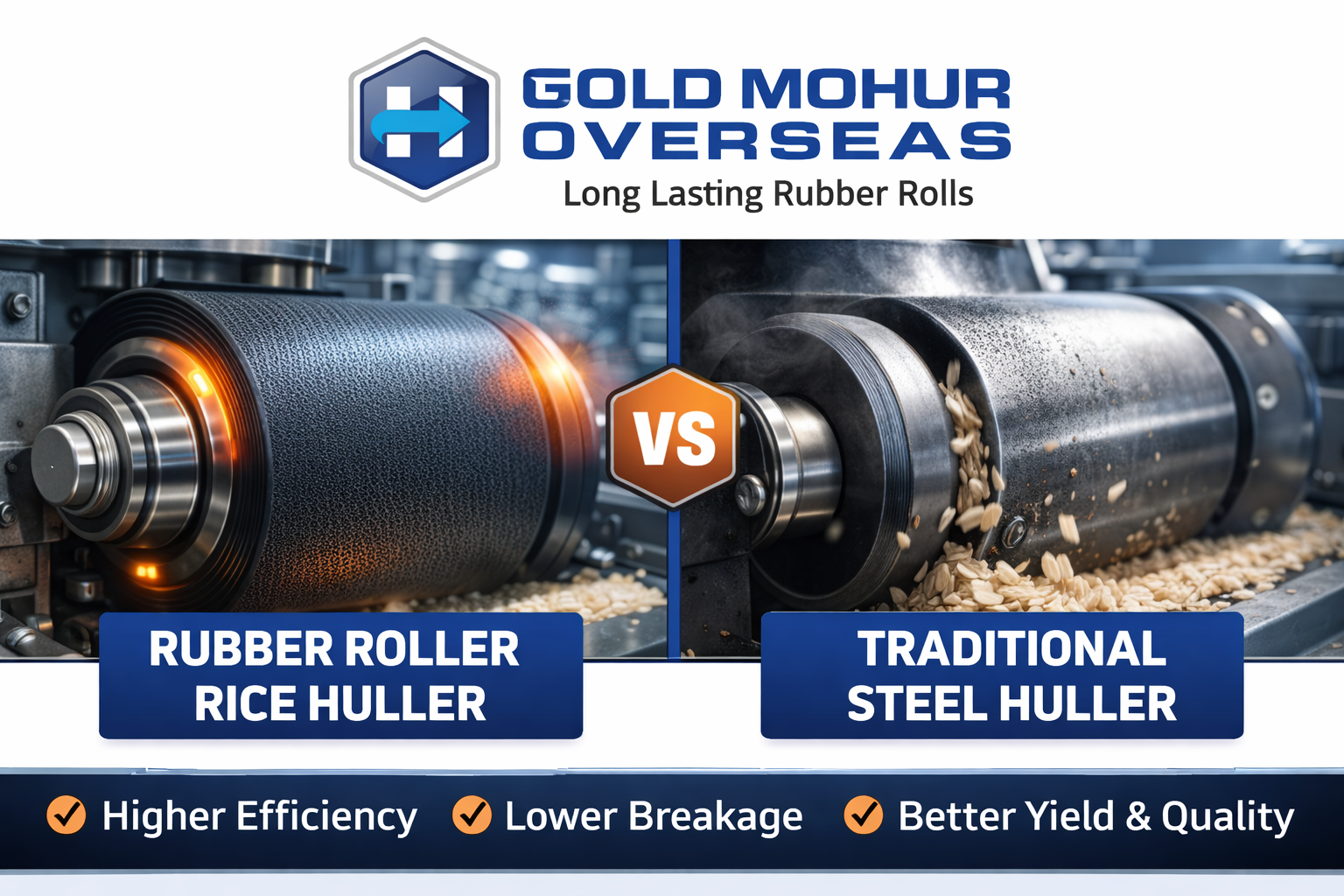
👉 Rice Rubber Roller vs Steel Huller – which is better?
Traditional steel hullers have been used for decades, but with increasing demand for high-quality rice and better head rice recovery, modern mills are shifting toward rubber roller rice hullers.
Research shows that nearly 70% of broken rice occurs during hulling and milling stages, making equipment selection critical for reducing losses and maximizing output
In this blog, we provide a complete rice huller comparison (rubber vs steel) to help you make the right decision.
What Is a Traditional Steel Rice Huller?
A steel huller rice mill machine is a conventional system that removes husk using abrasive pressure and rigid metal surfaces.
⚙️ Working Principle
- Paddy passes through steel or abrasive components
- High friction removes husk
- Continuous pressure is applied on grains
⚠️ Key Limitations
- High grain breakage
- Lower head rice recovery
- Reduced rice quality
👉 Steel hullers often scratch and damage rice kernels, lowering their market value
⚙️ What Is a Rubber Roller Rice Huller?
A rubber roller rice huller is a modern solution designed for efficient and gentle rice dehusking.
🔧 Working Principle
- Uses two rubber rollers rotating at different speeds
- Applies controlled compression and shear force
- Adjustable clearance ensures uniform hulling
👉 Rubber roll hullers apply elastic pressure instead of rigid force, reducing grain damage
🔥 Key Features of Rice Rubber Rollers
- High elasticity and flexibility
- Uniform grain handling
- Adjustable pressure control
- High durability and efficiency
👉 Rubber rollers are engineered to withstand mechanical stress while improving yield and output quality
⚖️ Rubber Roller Rice Huller vs Steel Huller (Complete Comparison)
| Feature | Rubber Roller Rice Huller | Traditional Steel Huller |
|---|---|---|
| Grain Breakage | Low | High |
| Head Rice Recovery | High | Low |
| Efficiency | High | Moderate |
| Grain Quality | Premium | Lower |
| Technology | Modern | Traditional |
| Pressure Control | Adjustable | Fixed |
📉 Grain Breakage & Rice Quality
One of the most important factors in this difference between rubber roll and steel huller is grain breakage.
❌ Steel Huller Issues
- High pressure damages grains
- Uneven force creates cracks
- More broken rice
✅ Rubber Roller Advantages
Rubber rollers use controlled and elastic pressure, which protects grain integrity.
👉 This results in:
- Reduced broken rice
- Higher head rice yield
- Better grain appearance
👉 Studies show rubber roll systems deliver higher efficiency and lower breakage compared to other hulling methods
📊 Efficiency & Milling Performance
Steel Huller
- Lower efficiency
- More reprocessing required
- Inconsistent output
Rubber Roller
- High hulling efficiency (85–95%)
- Better one-pass performance
- Reduced energy and labor
👉 Rubber roll hullers are considered the most efficient hulling machines in the rice milling industry
💰 Cost Comparison: Rubber Roll vs Steel Huller
💸 Steel Huller
- Lower initial cost
- Higher long-term losses due to:
- Broken rice
- Lower yield
- Poor quality
💵 Rubber Roller
- Slightly higher upfront investment
- Better ROI due to:
- Higher head rice recovery
- Premium product quality
- Increased selling price
👉 Rubber rollers significantly increase profitability by improving yield and reducing losses
🛠️ Maintenance & Durability
Steel Huller
- Durable machine
- Causes grain damage
- Requires frequent adjustments
Rubber Roller
- Requires periodic replacement
- Easy to maintain
- Consistent performance
👉 Rubber rollers may need replacement, but they increase yield and reduce breakage, making them more cost-effective overall
🧠 Which Is Better: Rubber Roll or Steel Huller?
✅ Choose Steel Huller If:
- You have a very limited budget
- You run a small traditional mill
- Quality is not your priority
✅ Choose Rubber Roller If:
- You want to reduce broken rice
- You want to improve rice yield
- You are targeting export-quality rice
- You want to modernize your rice mill
🚀 Why Rubber Rollers Are Replacing Steel Hullers
Modern rice mills are rapidly upgrading from steel huller to rubber roll systems because:
🔥 Key Benefits:
- Higher head rice recovery
- Lower grain breakage
- Better milling efficiency
- Improved rice quality
- Higher profitability
👉 Rubber roll technology is now the industry standard for modern rice milling
📈 How Rubber Rollers Improve Profitability
Using a rubber roller rice huller vs steel huller can significantly impact your business:
- 10–20% increase in yield
- Reduced broken rice losses
- Better market price
- Higher customer satisfaction
👉 Even a small improvement in recovery rate can lead to massive profit gains in large-scale mills
🎯 Final Verdict
When comparing Rice Rubber Roller vs Traditional Steel Huller, the answer is clear:
👉 Rubber Roller is the better choice for modern rice mills
While steel hullers may seem cost-effective initially, they result in:
- Higher breakage
- Lower quality
- Reduced profits
Rubber rollers provide the following:
- Better efficiency
- Higher yield
- Premium rice quality
📞 Why Choose Hindustan Group?
At Hindustan Group, we provide high-performance Rice Rubber Rollers designed for:
- Maximum durability
- High temperature resistance
- Superior milling performance
- Bulk production capacity
With 40+ years of expertise, we help rice millers achieve better yield, efficiency, and profitability.
Explore the range of our Rice Whitener Stones by Hindustan Group
Rice Rubber Roller | 1121 Rolls | Par Boiled Paddy Rolls | Rice Polishing Wheel | Rice Rubber Polisher Brakes / Sticks | PF Resin
👉 Upgrade your rice mill today with advanced Rice Rubber Rollers
Contact us for:
- Best price for rice rubber rollers
- Bulk and export orders
- Expert consultation