
Rubber Roller Temperature & Load Ratings Impact on Milling Performance
Table of Contents
Rubber Roller Temperature & Load Ratings Impact on Milling Performance
Maximize Your Rice Milling Efficiency with Precision Rubber Rollers
At Hindustan Group, we specialize in high-performance rubber rollers engineered for rice mills across India. Our advanced understanding of rubber roller temperature effects and load ratings ensures your rice milling operations achieve optimal throughput, minimal grain breakage, and superior quality.
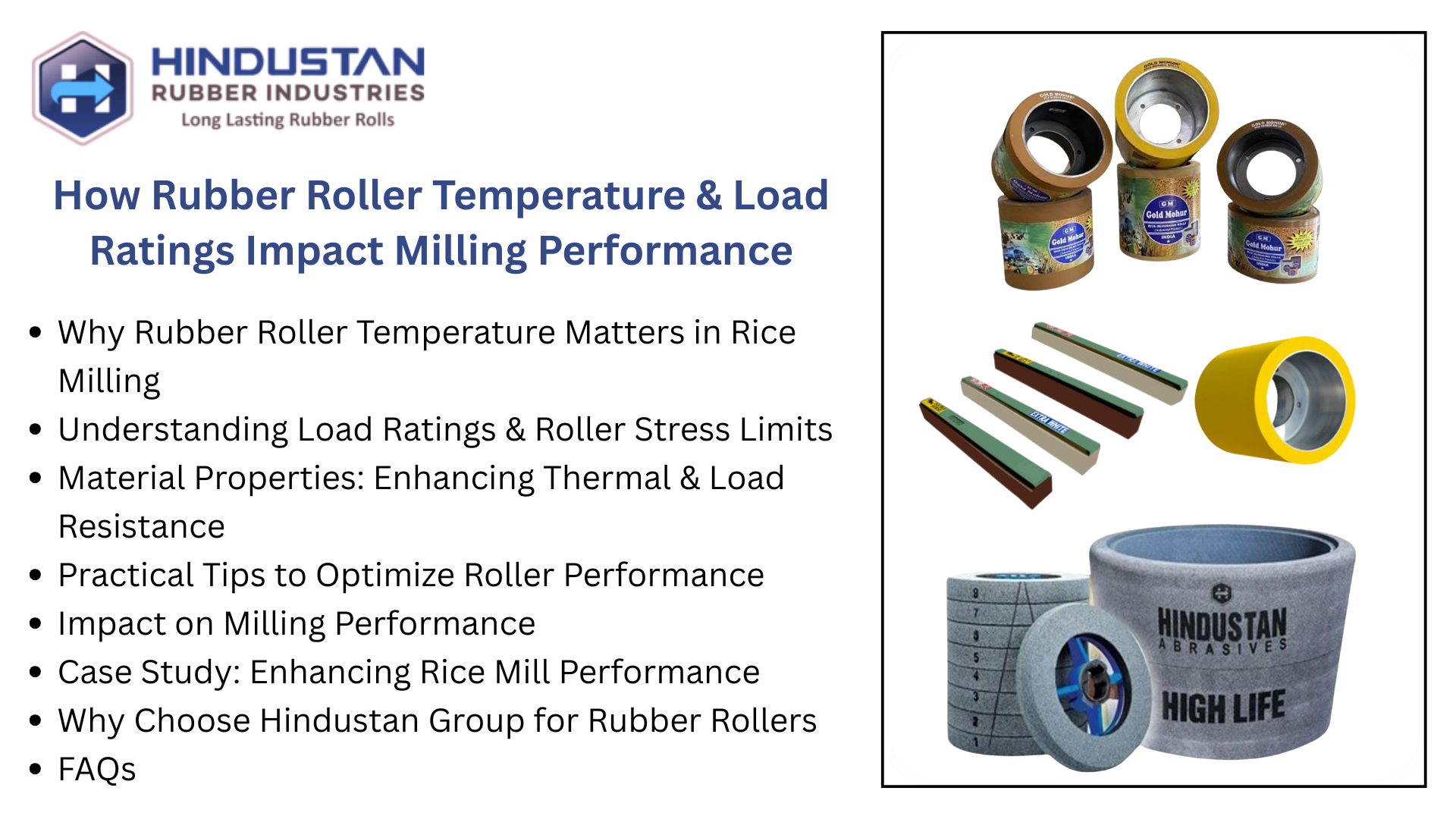
Rubber rollers are the heart of any rice mill. Their temperature tolerance, load capacity, and material properties directly influence milling performance, roller lifespan, and overall head rice yield. Understanding these parameters is essential for millers, production managers, and agro-processing investors who aim to enhance efficiency and profitability.
Why Rubber Roller Temperature Matters in Rice Milling
Temperature plays a critical role in rubber roller performance rice mill operations. Rubber materials like NBR, SBR, and EPDM respond differently under heat:
- High temperatures can cause softening, loss of hardness, or premature aging, reducing roller grip and milling efficiency.
- Low temperatures may lead to cracking, loss of elasticity, and poor grain handling.
- Maintaining rollers within the optimal operating temperature rice mill rollers range preserves mechanical integrity and dehusking efficiency.
Understanding Load Ratings & Roller Stress Limits
Load ratings rubber roller specifications indicate how much mechanical pressure a roller can sustain while maintaining performance and lifespan. Choosing rollers with correct load capacity rubber rollers prevents:
- Excessive deformation
- Uneven dehusking and milling output
- Premature roller wear
Our rice mill roller performance solutions are designed to handle varying operational loads, ensuring optimal throughput without compromising rice quality.
Important Link: Explore our 1121 Rolls and Parboiled Paddy Rolls engineered for high load and long-grain rice processing.
Material Properties: Enhancing Thermal & Load Resistance
The rubber roller material properties directly impact how rollers respond to temperature and load stress:
- NBR Rollers: High thermal stability and excellent resistance to mechanical stress rubber rollers.
- SBR Rollers: Flexible with moderate temperature tolerance; ideal for standard milling conditions.
- EPDM Rollers: Exceptional heat resistance for high-temperature operations.
By carefully selecting materials, we provide rollers that maintain hardness, elasticity, and performance, reducing breakage and downtime.
Important Link: Learn about our Rice Rubber Roller manufacturing process for precision-engineered solutions.
Practical Tips to Optimize Roller Performance
Maximizing rubber roller performance rice mill efficiency requires proactive maintenance and monitoring:
- Monitor Roller Temperature: Use infrared guns or built-in sensors to ensure rollers stay within safe limits.
- Match Load Ratings: Select rollers according to your mill’s throughput and processing requirements.
- Routine Inspections: Check for wear, micro-cracks, or surface deformation.
- Proper Installation: Ensure rollers are aligned and balanced to maintain milling efficiency.
- Material Upgrades: Consider PF resin bonded rollers for enhanced thermal resistance and durability.
Impact on Milling Performance
Correct roller temperature and load rating selection affects:
- Head Rice Yield: Reduces broken rice and increases premium grain output.
- Milling Recovery Rate: Optimizes the amount of usable rice per batch.
- Operational Consistency: Less downtime and fewer mechanical failures.
- Energy Efficiency: Rollers with correct specifications require less power to achieve desired throughput.
Case Study: Enhancing Rice Mill Performance
A commercial rice mill using our high-precision NBR rubber rollers reported:
- 12% reduction in broken rice
- 15% increase in milling recovery rate
- Reduced maintenance downtime by 20%
This demonstrates how choosing rollers with proper temperature tolerance and load capacity rubber rollers can drive measurable business results.
Why Choose Hindustan Group for Rubber Rollers
- Precision Engineering: Every roller is designed for exact temperature and load specifications.
- Material Expertise: NBR, SBR, and EPDM materials with high thermal stability and load capacity.
- Long-Term Reliability: Durable components that reduce maintenance frequency and maximize ROI.
- Technical Support: Guidance on roller selection, installation, and maintenance.
- B2B Partnerships: We work with mini rice mill entrepreneurs, commercial operators, and consultants to provide tailored solutions.
Ready to enhance your rice milling performance? Contact Hindustan Group today to select the perfect rubber rollers for your mill’s temperature and load requirements.
📞 Phone: +91-9650808253, +91 9810056924
📍 Address: 40, Gujranwala Town Part 2, Delhi, 110033
Explore the range of our Rice Whitener Stones by Hindustan Group
Rice Rubber Roller | 1121 Rolls | Par Boiled Paddy Rolls | Rice Polishing Wheel | Rice Rubber Polisher Brakes / Sticks | PF Resin
Frequently Asked Questions
Most industrial rubber rollers operate safely between 20°C and 50°C. Temperatures above this range may cause softening, reduced hardness, and accelerated wear. Selecting the right material like NBR or EPDM ensures higher thermal stability of rubber rollers.
Load ratings determine how much mechanical stress a roller can handle without deformation. Proper selection ensures uniform dehusking, reduces grain breakage, and improves overall milling performance.
Rollers should be inspected monthly for micro-cracks, surface wear, and thermal deformation. Regular inspection helps maintain roller lifespan and consistent head rice yield.
Yes! Upgrading to PF resin bonded rollers or NBR rollers enhances heat resistance, improves grip, and reduces breakage during heavy load operations.
Use infrared temperature guns, embedded sensors, or thermal imaging cameras to track roller temperature effects in real-time. This helps prevent overheating and maintains optimal milling performance.